

When the dialogue goes flat, the work begins.
Mastering the Creative Technique of Two-Chair Work. Solutions to the technique’s recurring problems, pitfalls and limitations, in six days with Michael Soth.
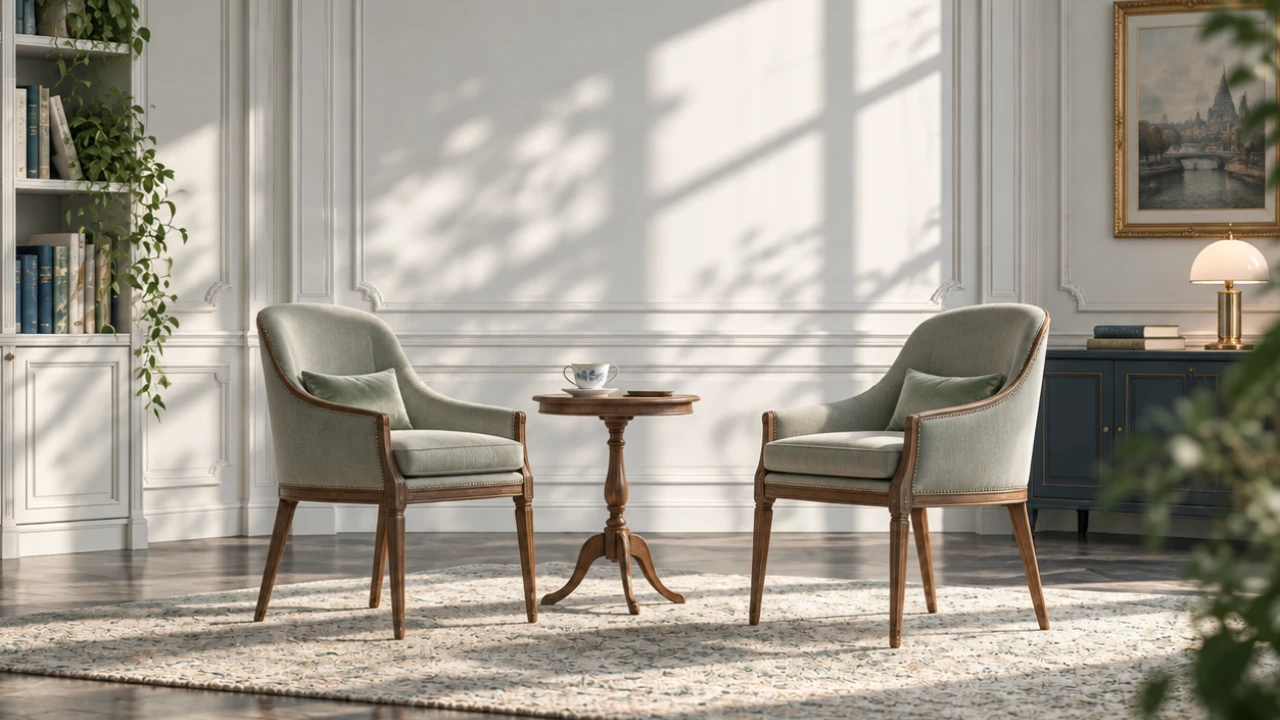
You set up the chairs. The spark disappears.
Few techniques shift therapy from talking about to exploring the experience as well as empty-chair or two-chair work. It works as well in supervision as in therapy.
But when therapists risk it, it often does not deliver. A burning, vibrant issue. Two chairs, two positions. And then the interaction goes flat, or starts going round in circles, or the client self-consciously refuses to “perform”.
Rather than setting ourselves and the client up for the pressure of a “good” outcome, we learn the principles of the technique and why the dialogue is bound to go flat. Then, when it does, that awareness becomes useful for the very dialogue we set up. It also takes care of the self-consciousness and performance anxiety that affect both client and therapist.
Two chairs. Two worlds. One pattern.
The technique invites the client to embody the felt reality of a relational difficulty, rather than talk about it, by separating out, spatially and therefore emotionally, the protagonists of otherwise diffuse conversations and ruminations.
Outer relationships
Psychodrama or role-play of interactions with actual others in outer reality.
Inner relationships
Externalising and enacting internal, fantasised or dreamt dynamics between different parts of the psyche.
The same technique moves fluidly between the two, helping the client not only see but feel the parallels between inner and outer ways of relating, the roots of relationships that stay unsatisfying, polarised or destructive.
The micro-detail of what you actually do and say.
This is as close to a recipe book or manual of therapeutic intervention as is feasible when what we are really interested in is the aliveness and spontaneity of the client-therapist interaction.
- What the therapist actually does and says
- When and how to intervene
- How to introduce and set up the work
- How to keep the experiential, embodied focus without forcing an outcome
- How to recognise what is happening when the dialogue loses energy
- How to perceive the mixing or flipping of the polarities as a predictable probability
- How to respond to self-consciousness and performance anxiety
- How to notice and deal with the charge jumping out of the dialogue into the transference
- How timing and sequencing affect the process
- How to facilitate movement towards resolution
The aim is not a mechanical procedure, but to understand the technique’s inherent logic and potential, even as the dialogue appears to go flat. You leave with detailed knowledge and skill, and with confidence and authority, whatever level of experience you bring. A detailed paper with many of the course’s ideas and principles is included.
Four stages, worked in sequence.
Discussion of principles and theory alternates with skills practice in twos, threes and small groups.
Perceiving the polarities
Recognising the positions, voices or relational configurations worth identifying, naming and bringing into dialogue.
Setting up the dialogue
Introducing chair work elegantly, so that it feels relevant and alive rather than artificial or imposed.
Directing the process
How much direction is useful, and what to do when the dialogue turns repetitive, intellectualised or flat, or when the polarities mix or flip.
Facilitating resolution
Supporting increasing awareness without imposing a “successful” outcome, including the possibility of a third position.
The technique arises from Gestalt, but it is now used across many schools, often without its origins being known. To address its pitfalls, Michael draws on body-oriented and psychoanalytic perspectives, and on NLP and CBT as well. That broad-spectrum view is why the course suits practitioners from every modality.
Three weekends, with time to practise in between.
The follow-on days are spaced so you can apply what you learn in your own practice during the weeks in between, then bring your experience back for deeper reflection and further learning.
Fees by region.
Choose where you live to see your fee. Nothing is paid on this page. Right after you book, you receive an email with your fee, the payment details for your region and a reference number. Once you have paid, upload your proof of payment with the link in that email. Your registration is confirmed once it has been received. Everything is recorded, so a missed day does not break the sequence.
All six days. Right after you book, you receive an email with the payment details. You can pay by:
- Bank transfer in pounds
- PayPal
- Revolut
All six days. Right after you book, you receive an email with the payment details. You can pay by:
- Bank transfer in euros
- PayPal
- Revolut
All six days. Right after you book, you receive an email with the payment details. You can pay by:
- PayPal
- Revolut
All six days. Right after you book, you receive an email with the payment details. You can pay by:
- Bank transfer in euros
- PayPal
- Revolut
Living somewhere else? Tell us your country below. You receive the payment details by email straight away, and Michael confirms the fee for your country.
- PayPal
- Revolut
- Bank transfer in pounds or euros
Included: six live days online, 11:00–18:30 UK · recordings of every session · a detailed paper · skills practice in small groups
Please note: we reserve the right to postpone or cancel the course if there are not enough registrations. If this happens, you can move your place to the new dates or receive a full refund of any payment made.
Michael Soth
Michael Soth is an integral-relational body psychotherapist, trainer, supervisor, mentor and group facilitator. He studied, lived and worked in the UK between 1982 and 2021, teaching on counselling and therapy trainings and serving for decades as Training Director at the Chiron Centre for Body Psychotherapy. He is co-editor of the Handbook of Body Psychotherapy and Somatic Psychology (2015). Since 2021 he has lived near the rainforest in Central America, where he works online and is building a regenerative retreat.